
How Home Automation is a Necessity and No Longer a Luxury
Ten years ago, smart homes were a status symbol for the few. Today, automation is quietly becoming the sensible default for any new or renovated property.
The Shift Has Already Happened
There was a time when home automation was undeniably a luxury — a curated collection of expensive gadgets assembled by early adopters who enjoyed the novelty as much as the function. The systems were proprietary, the interfaces were complex, and the value proposition was harder to articulate than it is today.
That time is behind us.
In 2025, the combination of technological maturity, falling hardware costs, rising energy prices, genuine security concerns, and a construction industry that increasingly plans for smart infrastructure from the first brick has moved home automation from the aspirational to the rational. For any property built or renovated today, the real question is no longer whether to automate, but how comprehensively.
The Practical Case: Security
Physical security is perhaps the most compelling entry point into home automation for homeowners who haven't yet made the transition. The traditional security model — a mechanical lock, a motion-triggered alarm, and possibly a basic CCTV recorder — has been comprehensively surpassed.
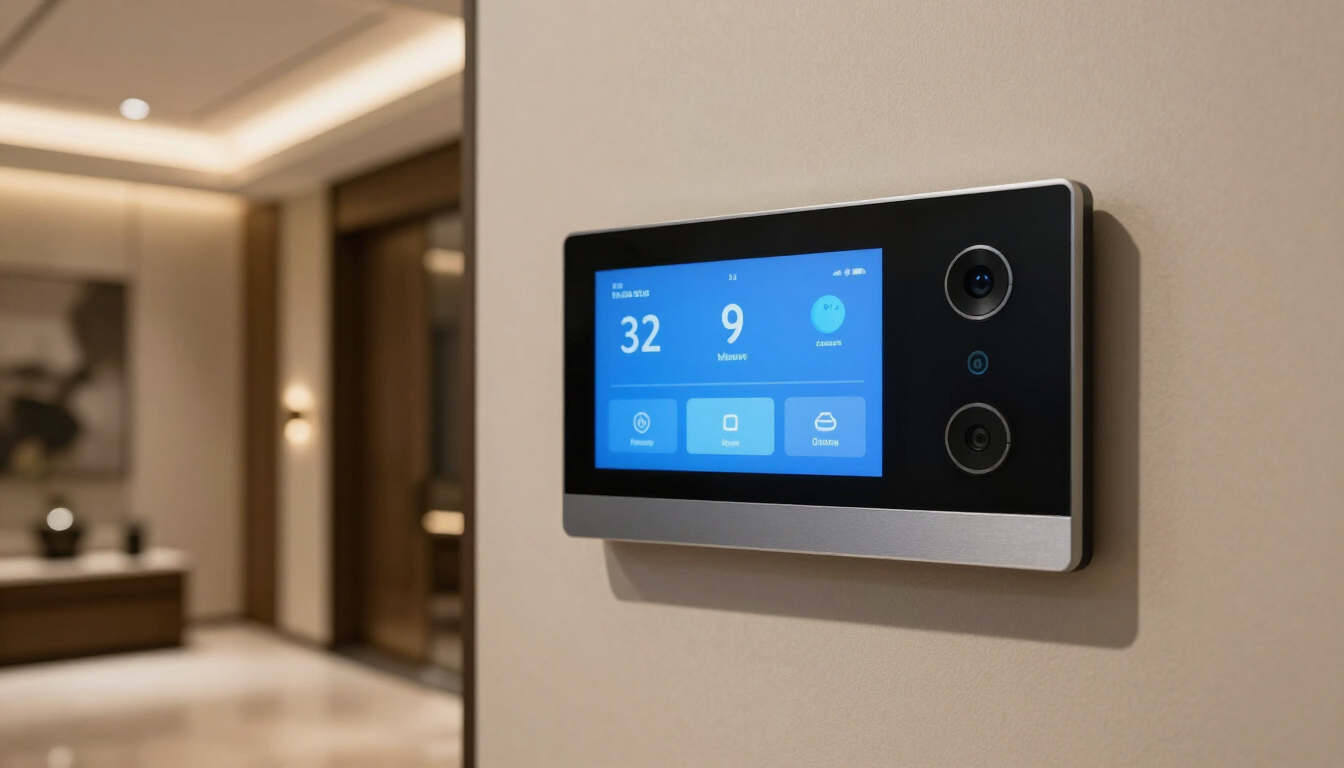
A modern integrated security system provides continuous CCTV coverage with remote live viewing and motion-triggered alerts; smart locks with biometric, PIN, or remote access that eliminate the risks of duplicated keys; video door phones that allow the homeowner to speak with, identify, and grant or deny access to visitors from anywhere in the world; automatic gates and boom barriers that can be controlled remotely; and access logs that record every entry and exit with timestamp and credential used.
In a country where domestic security concerns are real and growing, the home automation security stack isn't a luxury add-on. It is a sensible and increasingly standard protective measure.
The Practical Case: Energy
India's electricity tariffs have risen consistently. For households with air conditioning — which in most Indian climates is not optional — HVAC represents the majority of electricity consumption. An automated HVAC and lighting system doesn't ask for behavioural change. It simply ensures that systems run when they're needed and don't when they're not. The average reduction in electricity consumption that Svelte Technologies measures across its residential installations is 31%.
On a typical upper-middle-class or premium residential electricity bill, a 31% reduction is a meaningful sum. Compounded across years, and measured against the cost of the automation system itself, the financial return is not hypothetical — it is documented, measurable, and consistent.
The Practical Case: Property Value
The Indian real estate market is maturing. Buyers of premium residential properties increasingly evaluate smart infrastructure as they evaluate kitchen fittings, flooring, and finish quality — as a component of overall value. Developers in Tier 1 and Tier 2 cities are responding: new premium residential projects now routinely include pre-wiring for automation, smart intercoms, automated gates, and lobby management systems as standard features.
For an owner selling a retrofitted smart home, the automation infrastructure is a genuine differentiator in a competitive market. For a developer, it is increasingly a prerequisite for the premium segment.
The Practical Case: Convenience and Wellbeing
The convenience argument for home automation is well understood but often underestimated. A home that manages its own routines — that wakes with you, prepares for your arrival, adapts to your presence, and secures itself when you leave — reduces the daily cognitive load of domestic management in ways that are difficult to quantify but immediately felt.
Beyond convenience, there is a growing evidence base for the wellbeing benefits of intelligent environments. Human Centric Lighting systems that follow the circadian rhythm improve sleep quality and daytime alertness. Climate systems that maintain optimal humidity and temperature reduce respiratory discomfort. Security systems that provide genuine assurance reduce low-level domestic anxiety.
These are not luxury outcomes. They are quality-of-life improvements with direct implications for health and daily functioning.
The Timing Argument
There is one final, practical reason why home automation has moved from luxury to necessity: the cost of retrofitting.
New construction and major renovation represent the optimal window for automation infrastructure. Conduit routing, cable installation, and device placement are dramatically cheaper and less disruptive when built into the construction phase than when retrofitted into a finished property. The difference can represent 30–50% of the total system cost.
Homeowners building or renovating today who choose not to plan for automation infrastructure are making a decision that will cost them more to reverse later — and that will leave them, in the meantime, managing their homes with less intelligence than the technology already available could provide.
The question of whether to automate is settled. What remains is deciding when, and how well.
Continue Reading
From the Journal
Begin Your Journey
Let us design a space
that thinks with you.
Every intelligent home begins with a conversation. Book a complimentary consultation and let our specialists craft a solution around your lifestyle.