
Benefits of Home Automation Systems in Energy Savings
Smart homes aren't just more comfortable — they're measurably more efficient. Here's how intelligent automation consistently cuts energy bills by 20–40%.
The Real Cost of an Unintelligent Home
Most homes waste energy in ways their owners never see. A room that sits empty for six hours with the air conditioning still running. Lights left on in a corridor nobody uses after 10 PM. A water heater maintaining temperature through the night when nobody will shower until morning. These invisible inefficiencies accumulate into electricity bills that are often 30–50% higher than they need to be.
Home automation doesn't just add convenience — it adds intelligence to systems that were previously operating on assumption rather than data.
How Automated Systems Reduce Energy Consumption
Occupancy-Based Lighting Control
Traditional lighting operates on a binary: on or off, controlled by whoever last walked through the door. Automated lighting systems use a network of occupancy and motion sensors to ensure lights are active only when a space is occupied. When combined with daylight harvesting — where sensors measure ambient natural light and dim artificial sources accordingly — lighting energy consumption drops by 40–60% in typical residential applications.
HVAC Automation and Zone Control
Heating, ventilation and air conditioning represents the single largest energy draw in most homes, often accounting for 40–50% of the total electricity bill. An automated HVAC system introduces zone-by-zone control, ensuring that only occupied rooms are conditioned to comfort temperatures. Unoccupied guest rooms, living areas outside peak hours, and corridors can be held at a minimal set-point rather than the full comfort temperature.
Motion sensor integration takes this further: when a room empties, the HVAC system begins a gentle drift toward the energy-saving set-point within minutes, returning to comfort temperature before the occupant is scheduled to return.
Geofencing and Presence Detection
Modern automation systems can use the location of residents' smartphones to trigger pre-arrival and departure routines. As the last family member leaves home, the system shifts to "Away" mode — dimming to zero, holding HVAC at a passive set-point, and activating security monitoring. As the first resident begins the return journey, the system begins pre-cooling or pre-heating the home so it arrives at comfort temperature precisely on their return.
Smart Scheduling and Time-of-Use Optimisation
In regions with time-of-use electricity tariffs (where electricity costs more at peak hours), automation systems can schedule high-draw appliances — dishwashers, washing machines, water heaters — to operate during off-peak hours, reducing bills without any inconvenience to the household.
Energy Monitoring and Reporting
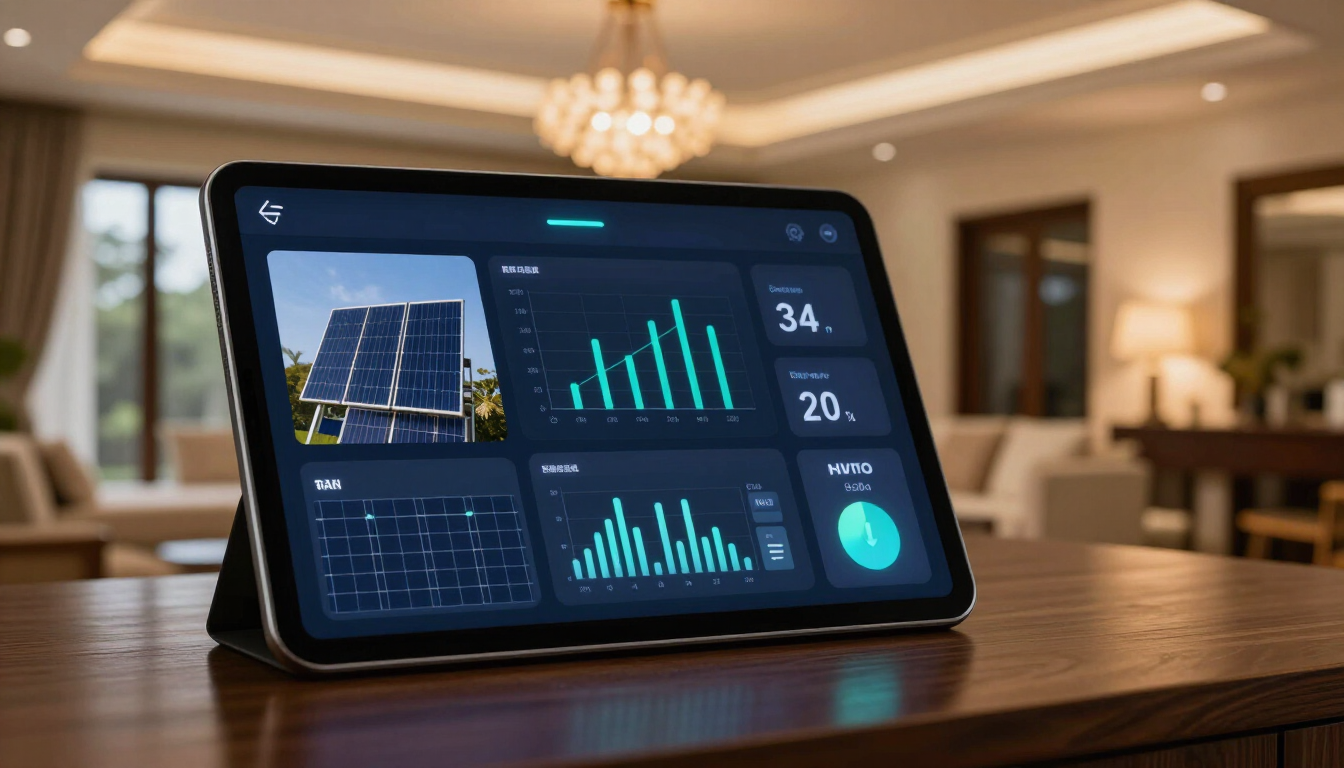
What gets measured gets managed. Integrated energy monitoring dashboards provide real-time and historical consumption data at the circuit or device level. Homeowners consistently report that simply seeing energy consumption in real time — particularly on a mobile app — drives behavioural changes that compound the gains already delivered by automation.
Measured Outcomes in Real Projects
Across the installations Svelte Technologies has completed, the average measured reduction in electricity consumption is 31%. In larger, more complex properties — hotels, commercial buildings, and gated community developments — the figure climbs higher.
At the Himalayan Adhesive Corporate HQ in Kichcha, Uttarakhand, an integrated KNX lighting control and energy management system delivered consistent results across the building's common areas, boardrooms, and office floors. The Omaxe Riviera Housing Society project demonstrated how building-scale automation compounds individual efficiency gains into significant estate-wide savings.
The Return on Investment
The capital investment in a quality home automation system is real. The payback period, however, is shorter than most homeowners expect. For a well-specified residential project, the combination of reduced electricity bills and the added property value delivered by smart home infrastructure typically produces a full financial return within five to eight years — after which the efficiency savings are pure gain.
More importantly, the daily comfort improvements, the reduction in manual management, and the peace of mind that comes from intelligent, always-on oversight of your home are returns that resist simple financial calculation.
An intelligent home pays for itself. The only question is when you'd like to start.
From the Journal
Begin Your Journey
Let us design a space
that thinks with you.
Every intelligent home begins with a conversation. Book a complimentary consultation and let our specialists craft a solution around your lifestyle.